
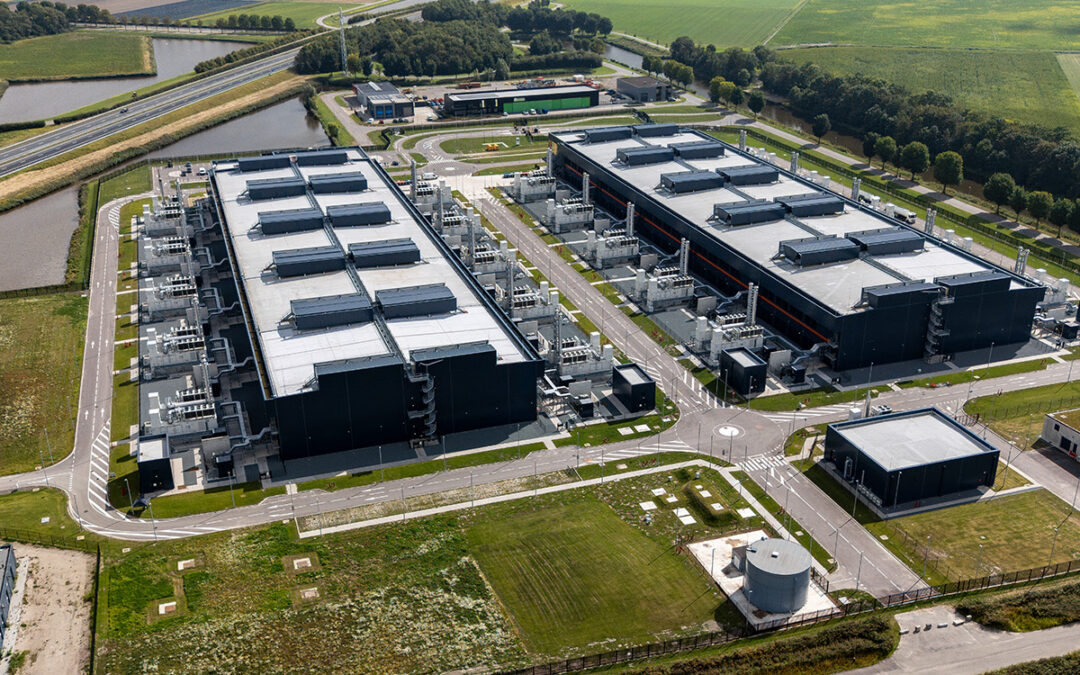
Data centres are becoming an important component of municipal digital and location policy. However, the path from an initial site concept to an investable project is complex. Municipal utilities can bring key interfaces together – and help shape viable, accepted projects.
Data centres are no longer a niche topic for the digital economy. They are increasingly moving into the focus of municipal economic and location policy. They promise regional value creation, jobs and stronger digital location quality – making them a strategic option that more and more municipalities and municipal utilities are seriously considering.
At the same time, the benefits of data centres for municipalities are not undisputed. Their high energy and land requirements stand in contrast to a comparatively small number of permanent jobs, and questions around waste heat use and available network capacity remain unresolved in many places. Those who consider these aspects from the outset gain arguments for a factual local dialogue. Those who ignore them risk resistance once an initial site concept turns into a concrete project.
However, there is a long and complex path between a promising site concept and a project that is actually investable. A suitable plot of land alone does not make a project feasible. Whether an idea can become an implementable project depends on the interplay of planning law, grid connection, energy and heat concepts, and a viable financing and operating structure.
For municipalities and municipal utilities, this creates several areas of tension: between economic interest and public acceptance, between technical feasibility and the legal framework, and between the desire for rapid implementation and the need for solid preparation. In practice, public acceptance often proves to be the real bottleneck. Noise emissions, land use, electricity consumption and the need for cooling water regularly lead to local debate – and therefore to delays if they are not addressed at an early stage.
In our session at the VKU Stadtwerkekongress, we will show in detail which review steps, project models and financing models have proven effective in practice, and how municipalities, municipal utilities, network operators and investors can organise themselves in a sensible way. Participants will be given a structured approach and concrete examples to help them better assess and manage their own data centre projects from the initial idea through to implementation.
Find out more at the VKU Stadtwerkekongress 2026: Maxi Kussatz will speak on 16 September from 14:15 to 15:00 in the breakout session “Data centres as municipal infrastructure projects – from the initial idea to investable implementation”.
Contact

Maxi Sophie Kussatz
Senior Investment Advisor for Infrastructure Projects
Private Sector Consulting
Tel.: +49 30 22183-1118
Mail: m.kussatz@aconium.eu