
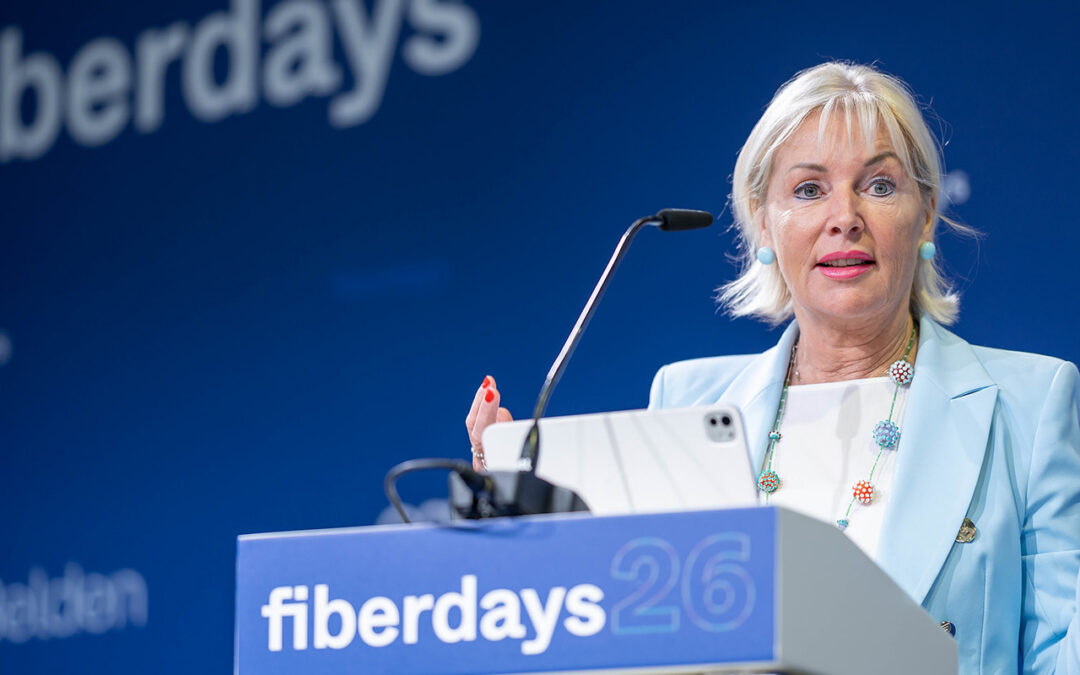
The BREKO fiberdays 2026 made it clear that fibre optics is far more than just a technical expansion target. Digital infrastructure has become a cross-cutting task: it links economic development, administration, the data economy, innovation capacity and social participation. Consequently, the industry is primarily concerned with the question of how infrastructures can be planned and further developed in such a way that they remain efficient, resilient and future-proof in the long term.
The sense of optimism was palpable in the halls right from the moment the exhibition opened. The theme of this year’s fiberdays, ‘Moving forward together. Resilient. Sustainable. Future-proof’, ran like a thread through the first day of the event. With the right infrastructure in place, the many innovative ideas on the market can be fully realised. Fibre optics are, of course, an integral part of this today. The challenge remains to deliver the digital infrastructure quickly and with resilient networks.
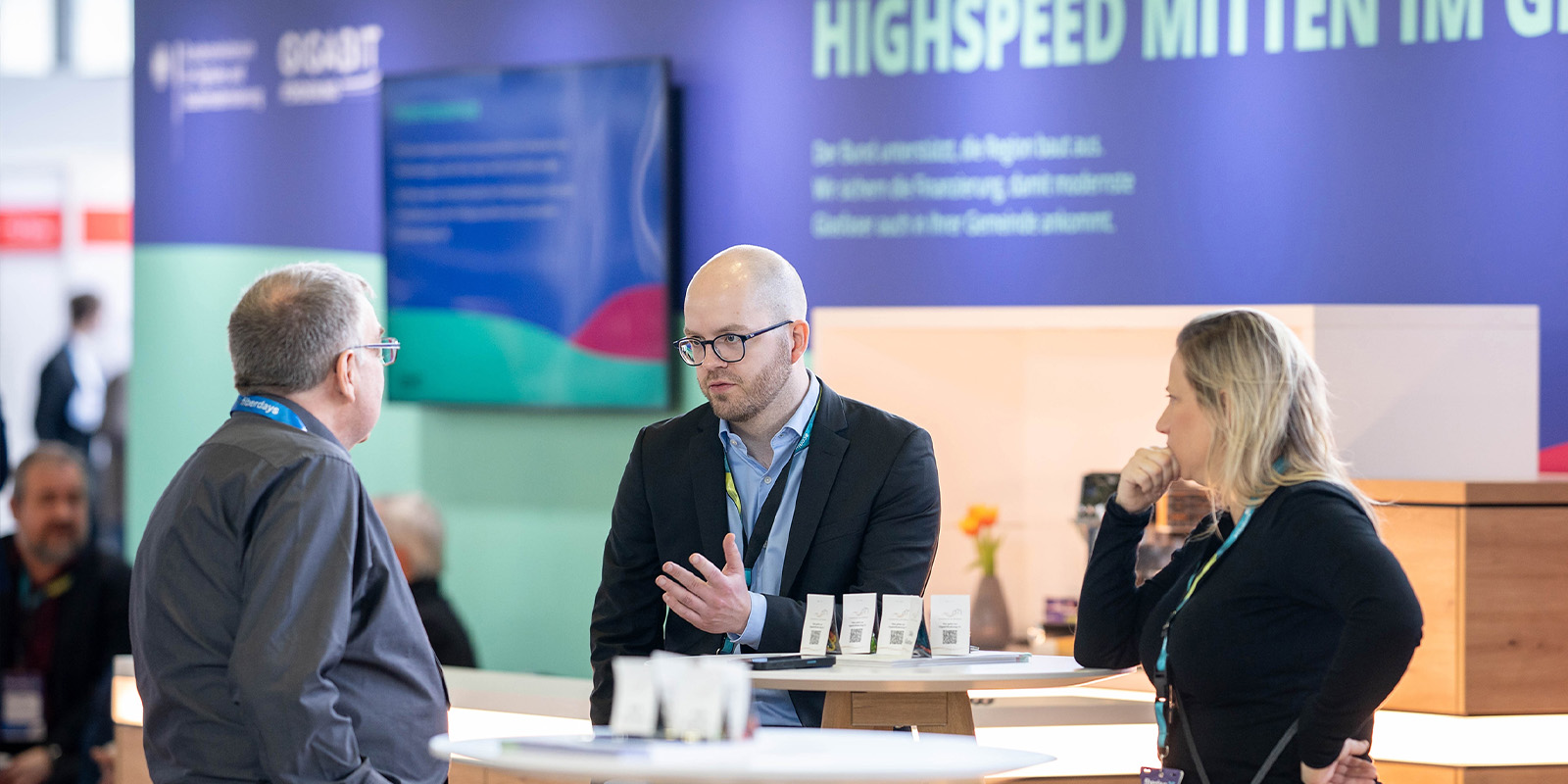
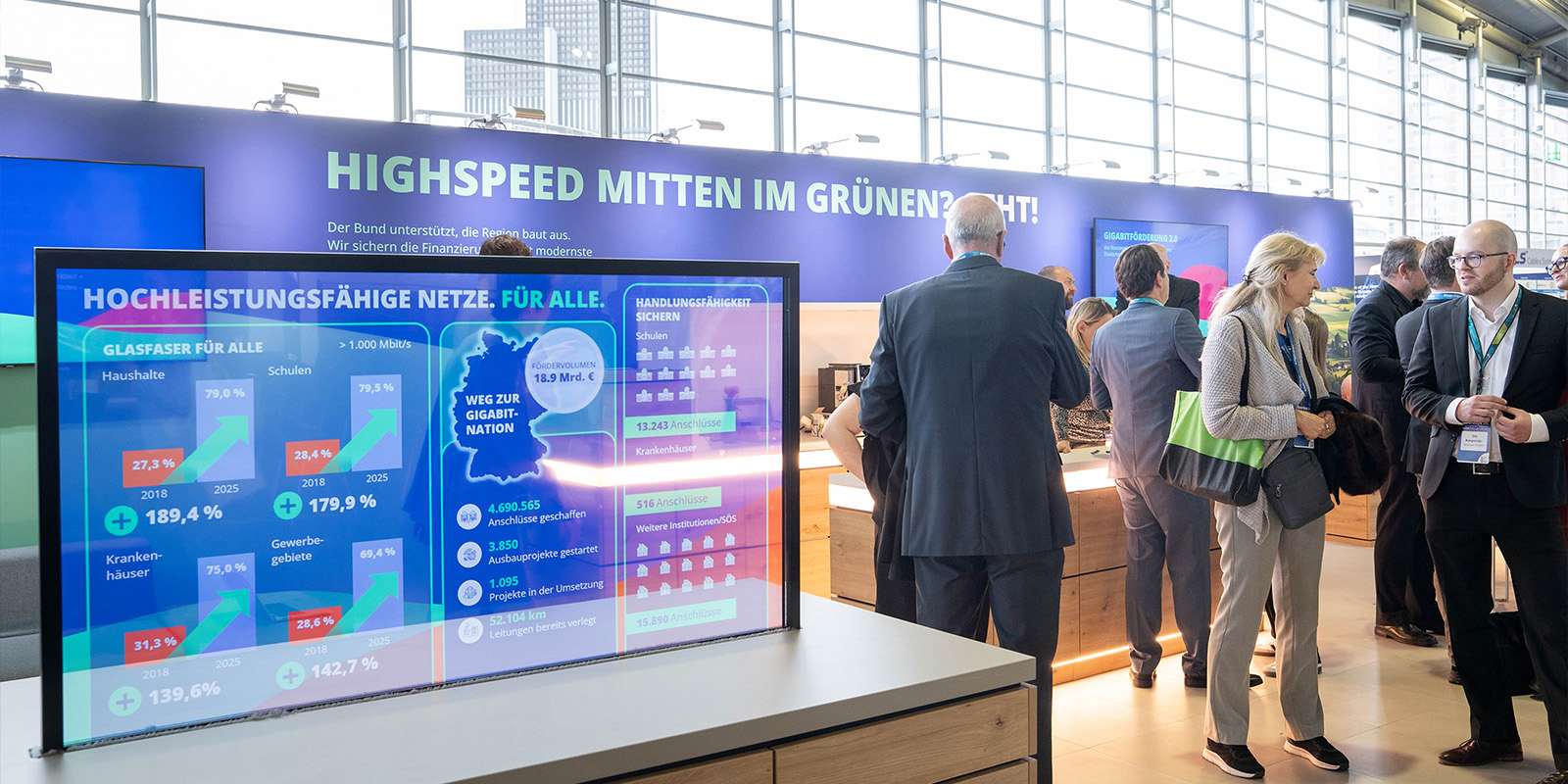
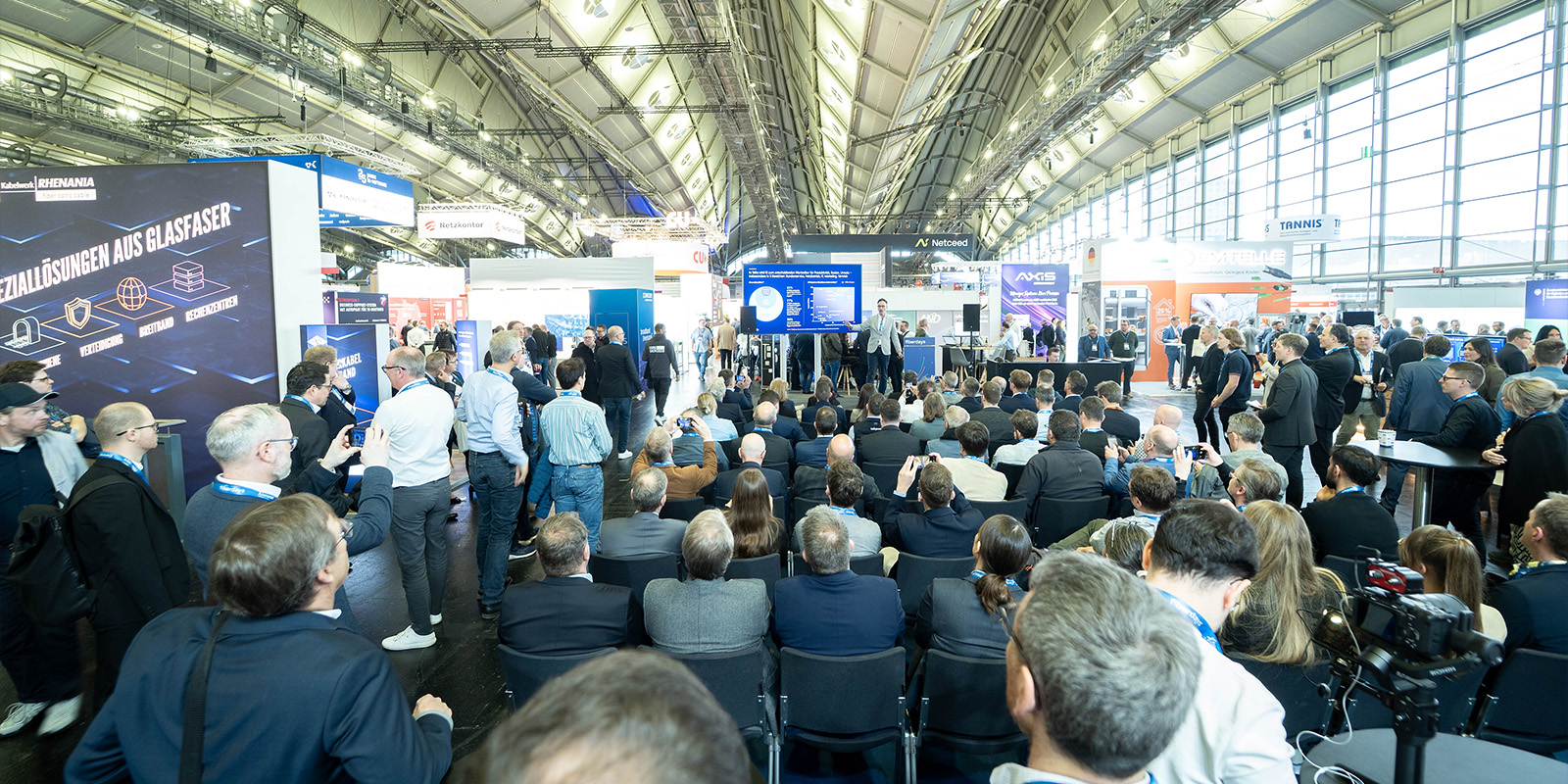
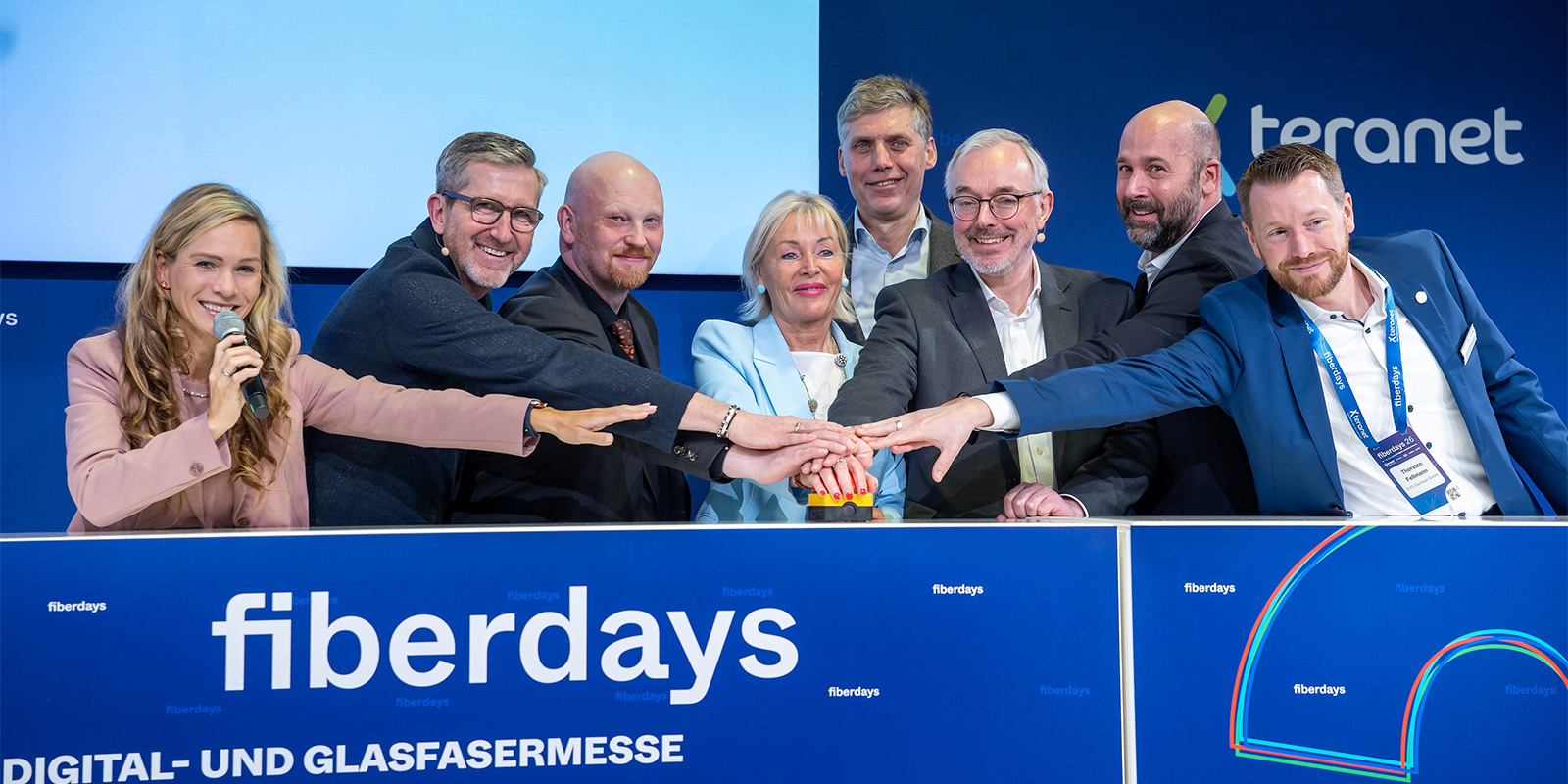
During the opening panel, BREKO President Norbert Westfal and BREKO Managing Director Dr Stephan Albers welcomed the visitors, organisers and partners of the trade fair. They particularly highlighted the 15th anniversary of fiberdays and, in a brief look back at the fair’s beginnings, felt vindicated by the industry’s growing importance.
In terms of content, the focus was on the role of competition in the telecommunications market. A recent Civey survey shows that 65 per cent of respondents rate it as ‘rather good’ or ‘very good’ that consumers can choose from many telecommunications companies rather than just one provider. Only 16.1 per cent view this negatively. For consumers, the benefits of competition lie primarily in lower prices, a wider choice of tariffs and better services.
The investment power of competition was also highlighted: according to a BREKO market analysis, €15.3 billion was invested in 2024, 65.5 per cent of which was driven by competition. Since 1998, investment in the market has totalled €230 billion.
Minister Sinemus: Strengthening Europe’s digital infrastructure
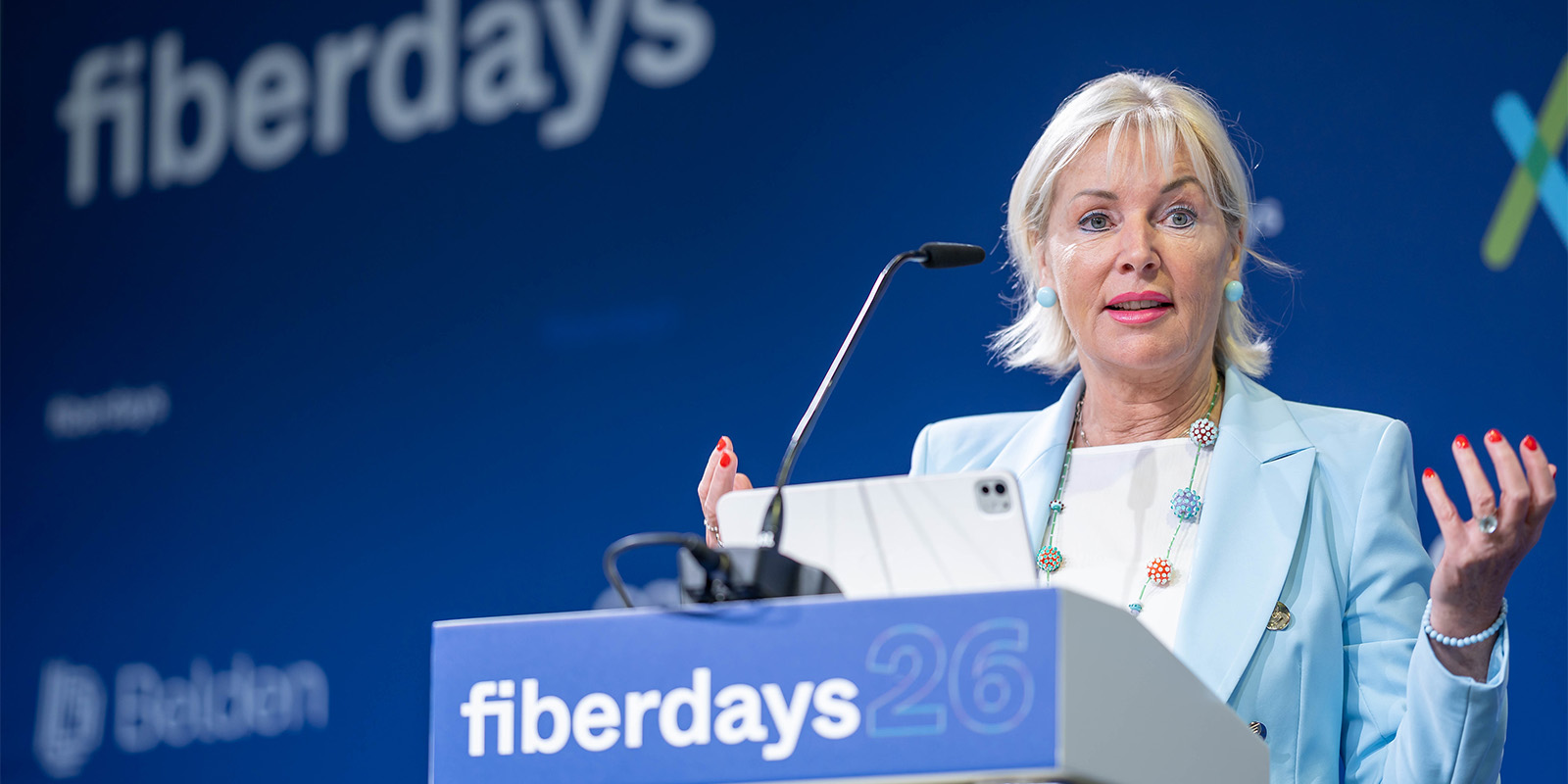
Another highlight of the morning was the keynote speech by Hesse’s Minister for Digital Affairs, Prof. Dr Kristina Sinemus. She made it clear that Europe must be strengthened as a digital hub in order to keep Germany competitive too. Hesse is already playing a special role in this regard.
A key topic was the question of how infrastructure projects can be planned more quickly, more soundly and in a financially viable manner. Data-driven approaches provide greater planning certainty here, as they bring together expansion options, costs, scenarios and implementation conditions at an early stage. Hesse intends to make targeted investments in fibre optics, mobile communications and 6G campus networks. Sinemus cited the reduction of red tape, innovation-friendly regulations and the broadband portal – with the aim of fully digital application processes – as key levers to further accelerate approval procedures.
It also became clear that strong data centre locations play a special role in competitiveness, the data economy and digital sovereignty. At the same time, this brings issues of energy supply, land availability, network connectivity, sustainability and approval processes to the fore. In this context, the Minister referred to Hesse’s data centre strategy, which is intended to bring together issues such as sustainability, network expansion and competitiveness. aconium is currently developing guidelines and recommendations for action for the sustainable, resilient and future-proof development of data centres in Hesse on behalf of Hessen Trade and Invest (HTAI) under the leadership of the Hessian Ministry for Digitalisation and Innovation (HMDI). The strategy process addresses in particular the areas of energy supply and waste heat utilisation, spatial planning and site development, as well as the establishment of a high-performance digital ecosystem.
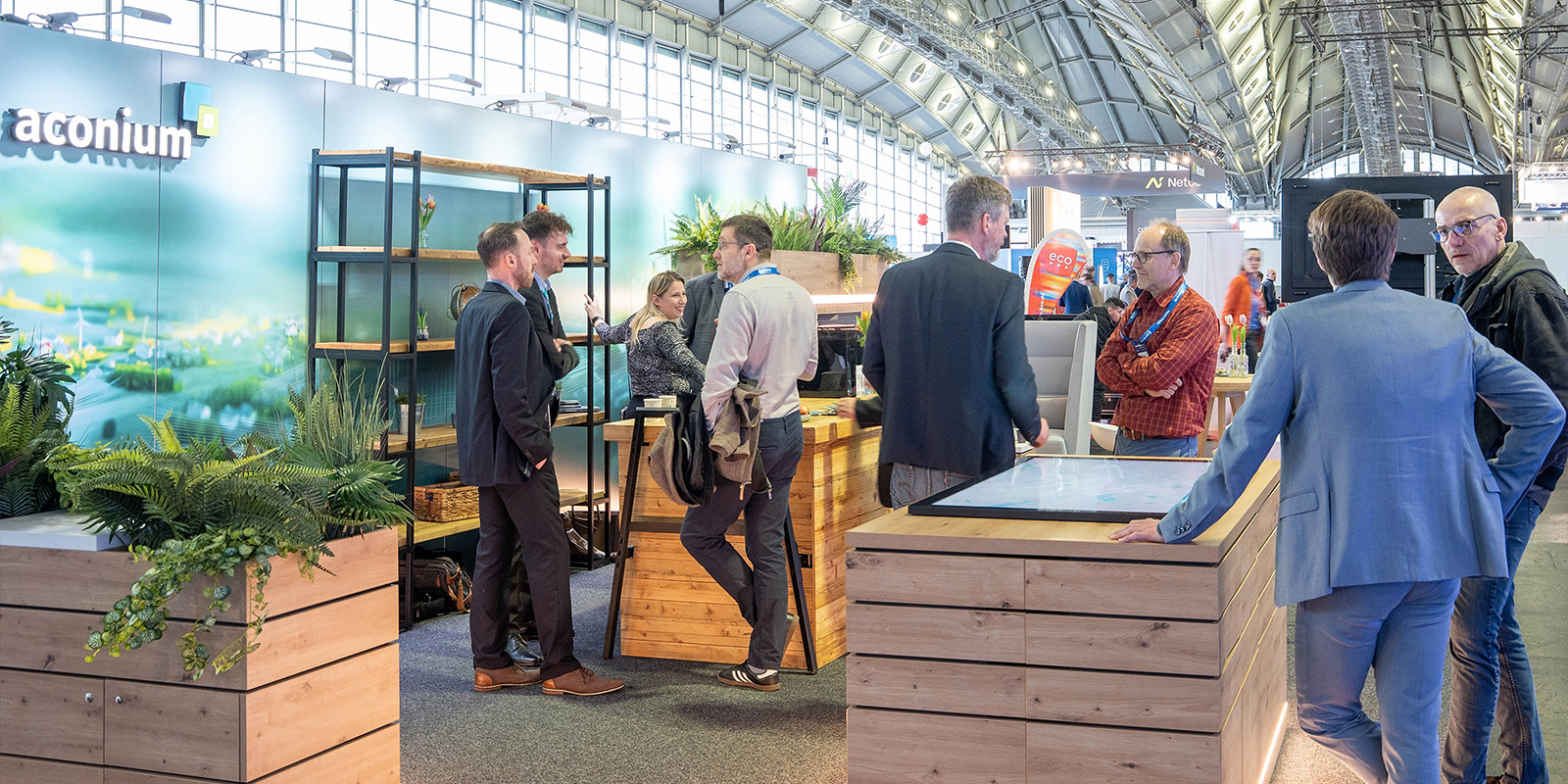
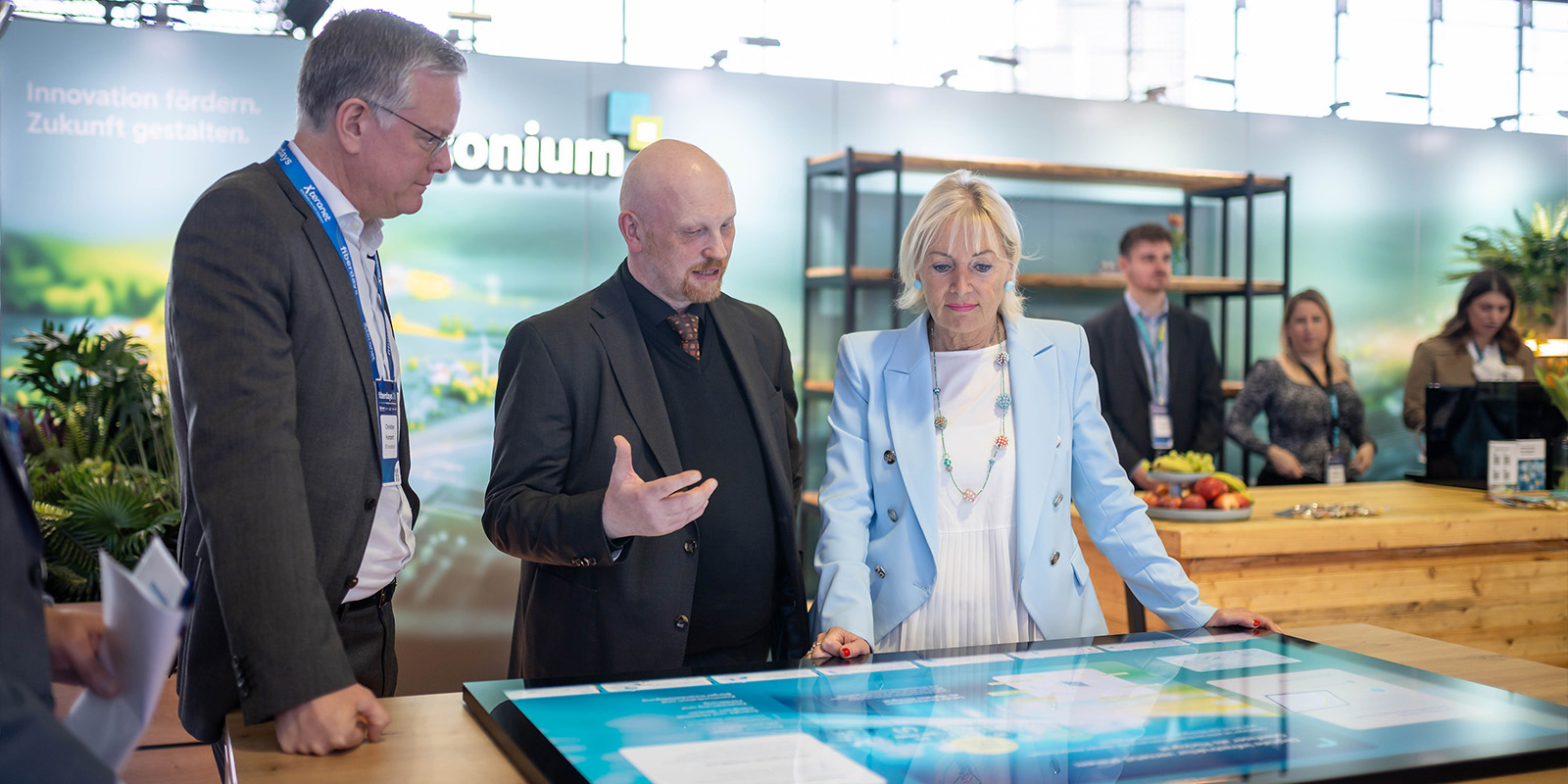
At aconium’s stand at fiberdays, the Minister was able to learn about further application examples from the fields of digital infrastructure, artificial intelligence, resilient networks and the strategic interconnection of innovation, regulation and implementation.
Discussions at the aconium stand: thinking strategically about digital infrastructures
State Secretary Sauer’s visit to the aconium stand also fitted into this broader context. In discussions with the team, the focus was on the opportunities offered by digital infrastructure for public administration and regions, as well as on issues of resilient structures, clear governance and practical implementation.
It became clear that digital sustainability does not arise from isolated measures, but from the interplay of technical, organisational and political levels. Networks, data, computing capacity, planning and regional value creation must be considered together so that digital transformation can have a lasting impact.
aconium brings AI perspectives to the fore
At the opening event, Tim Brauckmüller, Managing Director of aconium, emphasised that fibre optics is far more than just infrastructure – it is a cross-cutting infrastructure that touches on numerous future-oriented issues. Accordingly, aconium viewed the AI Forum at the BREKO fiberdays as a venue where not only technological possibilities but also concrete use cases, challenges and future prospects were discussed.
At the AI Forum, it became clear that the productive use of AI is becoming particularly relevant in areas where complexity is increasing, data volumes are growing, and decision-making processes need to be accelerated. The presentations deliberately covered a wide range of topics: from the evaluation of domain-specific AI applications and the use of intelligent methods in network planning to the legal, infrastructural and organisational requirements. The guiding principle was not to view AI in isolation as a technology, but as a tool that is only effective when embedded in real-world processes, existing architectures and responsible governance.
A key focus was the question of the quality and reliability of AI systems. Using the example of corporate chatbots in the water sector, it was demonstrated that AI applications depend not only on performance, but equally on assessability, interpretative reliability and the robust classification of results. This brought to the fore an issue that extends far beyond individual sectors: anyone wishing to use AI effectively needs suitable benchmarks to systematically assess quality, robustness and practical suitability.
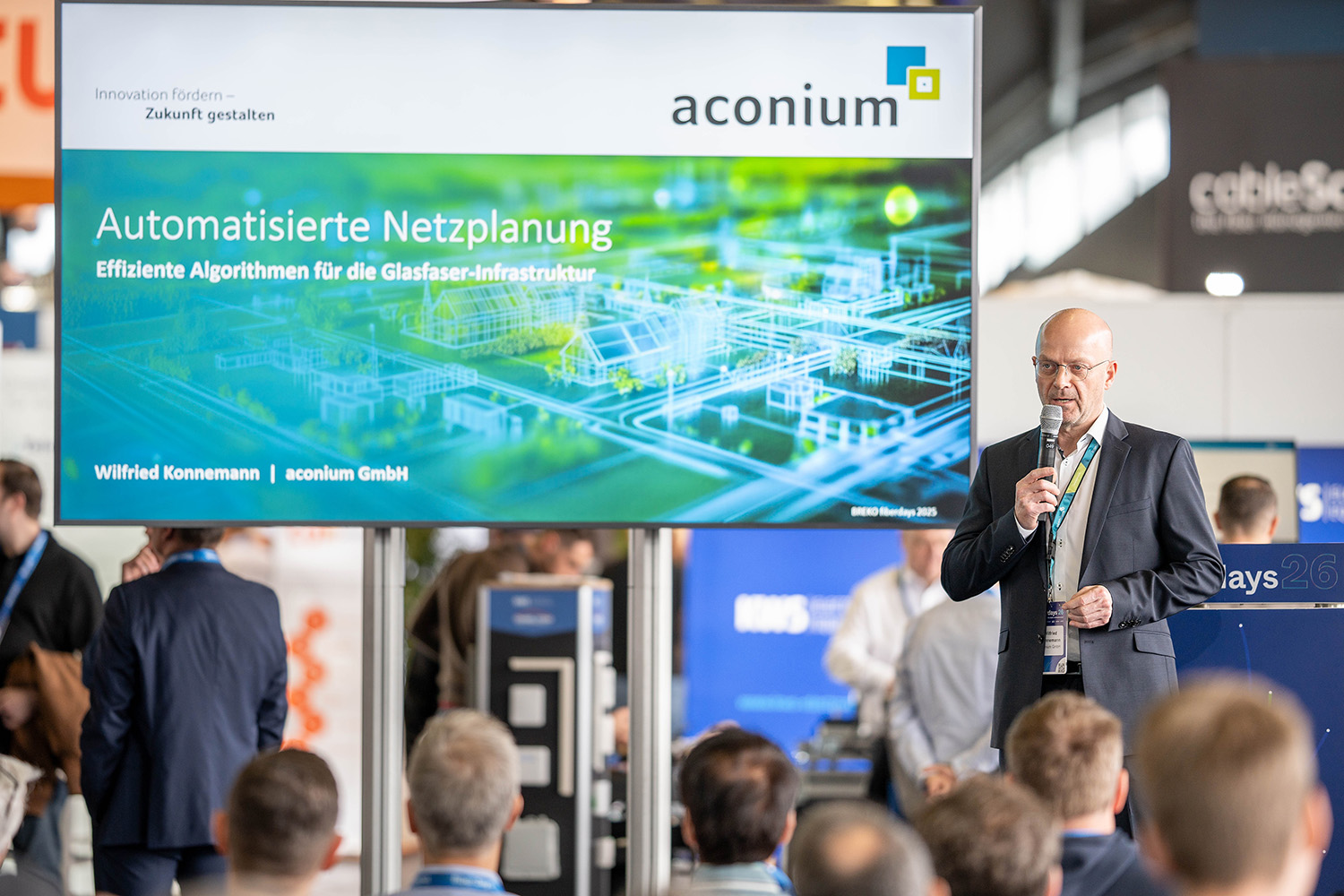
In addition, AI emerged as a tangible lever for boosting efficiency in the infrastructure sector. Particularly in automated network planning, the potential of algorithmic methods to provide data-driven support for complex expansion projects and significantly accelerate planning processes became apparent. At the same time, it was acknowledged that real-world environmental conditions, heterogeneous data sets and technical details mark the limits of today’s systems. It was precisely this combination of practical benefits and realistic assessment that constituted the added value of the forum: the focus was not on empty promises, but on concrete use cases with a clear development path.
Another strand of the discussion concerned the security and integrity of digital systems. With regard to manipulable endpoints, sensors, network nodes and AI models, it became clear that as automation increases, so too do the requirements for trustworthiness, protection mechanisms and integrity strategies. Here, AI was treated not only as a process accelerator, but also as part of a critical infrastructure whose resilience and security must be taken into account. In doing so, the forum brought a topic to the fore that is crucial for the future of digital infrastructures: performance alone is not enough if systems are not simultaneously robust, verifiable and resilient.
Furthermore, the AI Forum demonstrated that AI has long been having a significant impact in related fields as well. Presentations on telecommunications, SMEs, accounting, process automation, construction documentation and GIS made it clear that many challenges are similar across sectors: these include data quality, interfaces, standardisation, human validation and the question of how technological systems can be meaningfully integrated into operational processes. It was precisely this cross-sector perspective that aligned with the forum’s strategic aim of viewing infrastructure not in silos, but as interoperable and holistic.
aconium on panel discussing edge infrastructures and data centres
Beyond the AI Forum, aconium also contributed its expertise to high-profile discussions. At the high-level panel ‘From the fibre-optic network to the edge data centre – How local infrastructure becomes a control centre’ at the Eco Datacenter Plaza, Dirk Loop discussed the growing importance of local digital infrastructure with representatives from the data centre and telecommunications industries.
The high-level panel broadened this perspective further, focusing on the interconnections between fibre-optic networks, edge infrastructures and decentralised data centre structures. The discussion made it clear that the future of digital infrastructure lies not solely in high-performance networks, but in their interaction with regionally anchored data processing and computing capacities. Local edge and data centre structures were seen as strategic hubs capable of enabling low latency, greater reliability and new regional value creation. From this perspective, it is crucial to view digital infrastructure as an ecosystem – with connectivity, computing power, energy supply and security requirements as interlinked building blocks.
Digital sovereignty and resilience as a European challenge
Another highlight was the ICX panel ‘Data Sovereignty & Resilience’. Here, Maxi Sophie Kussatz discussed digital sovereignty, regulation and resilient infrastructures with representatives from BEREC and the data centre industry.
From aconium’s perspective, it became clear that anyone wishing to successfully develop digital infrastructure must keep an equal eye on regulation and implementation. aconium therefore recommends investing specifically in digital infrastructure at the local authority level, bringing together all relevant stakeholders in the process. Resilience arises where different areas of infrastructure are intelligently conceived and interconnected.
The panel also emphasised that Europe should forge its own path – not by copying other markets, but through a sustainable, strategic and partnership-based infrastructure policy. Data sovereignty encompasses far more than the location of individual data centres: it concerns the question of how data, regulation, energy, networks and digital services interact in Europe.
This was precisely a key message of fiberdays 2026: resilient digital infrastructure is not created by individual solutions, but through the intelligent interplay of technology, governance, regulation and implementation expertise. Harmonisation can help where it improves predictability, interoperability and scalability; at the same time, sufficient flexibility is needed so that investment, innovation and operational feasibility are not hindered. For aconium, this once again highlighted its role as a bridge-builder between strategic goals, the public sector, market players and practical implementation.
Overall, the BREKO fiberdays 2026 thus highlighted one thing above all else: the crucial future issues of digital infrastructure lie at the interfaces. AI, fibre optics, data centres, regulation and sovereignty are no longer separate areas of focus, but parts of a shared infrastructural reality. The AI Forum and the strategic panels highlighted precisely these interconnections – in a practical, cross-sectoral manner and with a clear focus on how technological possibilities can be transformed into robust structures for a resilient digital future.