

Digitisation
The implementation of new, digital processes and the use of e-services, for example in the context of e-government applications for local authorities, are core elements of digitalization for the public sector. Intelligent hardware and software and the linking of ever larger data sets offer considerable potential and form the basis for a large number of innovations.
Digitalization does not have a limited spatial or thematic impact – increasingly, the development of regions and municipalities is also being determined by digitalization, with new business and action opportunities opening up for regions and local companies, education, culture and administration. Supporting public institutions on the path to digitalization is therefore a key element of our work in the area of regional development. aconium GmbH also contributes its extensive expertise to topics such as smart cities, 5G and others in lectures and articles for specialist journals. We develop and publish studies on the digitalization plans of the EU member states, which provide an overview of the status quo of connectivity and the digital development of the member states.
For the “Gigabit Society 2025” goal, it is important to think ahead from previous activities. In order to achieve this goal, planning must also include a modern 5G mobile network, for example. The current and future expansion of fiber optics is an important building block for this. With our experience and expertise, we are an important point of contact for public institutions in particular when it comes to tapping into additional regional and economic market potential for the various players in broadband expansion.
Broadband expansion
The opportunities offered by digitalization depend on various factors. One of these is the nationwide availability of broadband internet, a prerequisite for functioning digital services. From December 2010 to April 2020, aconium GmbH used its expertise in broadband expansion as the Federal Broadband Bureau (BBB). The BBB was the competence center of the Federal Ministry of Transport and Digital Infrastructure (BMVI, now BMDV) and supported broadband development.
Since 2016, aconium GmbH has been an entrusted project management organization of the Federal Ministry of Digital and Transport and is responsible for handling the entire application process as part of the broadband funding program of the federal government in funding area B. This makes our company the lead company at federal level for the implementation of funded broadband projects.
5G study
In a study commissioned by Hessen Trade & Invest (HTAI), aconium GmbH has examined the challenges facing local authorities in the expansion of the 5th generation of mobile communications (5G). The study was published by the Hessian Ministry of Economics, Energy, Transport and Regional Development.
Articles on the topic of digitization
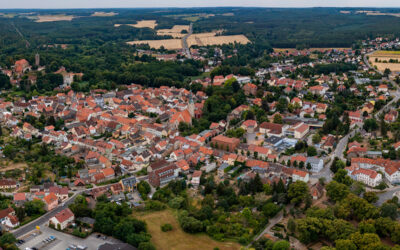
Digitalisation that lasts: what Bad Belzig can show other municipalities
Smaller municipalities such as Bad Belzig are using programmes like the Model Projects Smart Cities competition to actively shape digital development and test their own solutions for urban development, administration and essential public services. If this is to become...

BREKO fiberdays 2026: From resilience to AI
The BREKO fiberdays 2026 made it clear that fibre optics is far more than just a technical expansion target. Digital infrastructure has become a cross-cutting task: it links economic development, administration, the data economy, innovation capacity and social...

Resilient digital infrastructures: Why network stability is becoming a key challenge for local and national authorities
When people talk about digital infrastructure, the discussion often centres on expansion targets, bandwidths and coverage gaps. Yet the real question for the future has long been a different one: how resilient are the digital networks and systems on which the state,...
Projects on the topic of digitalization
Stronghouse had set itself the goal of reducing the ecological footprint of 15,000 homes in the North Sea region, generating 100 million euros in investment and …
The aim of the LowTEMP 2.0 project was to strengthen and expand capacity building for low-temperature district heating networks in the Baltic Sea region. With the transfer of knowledge …
The main objective of the HyTrEc 2 project is to create conditions under which the FCEV market can develop and the North Sea region can become a competence region for fuel cells.